
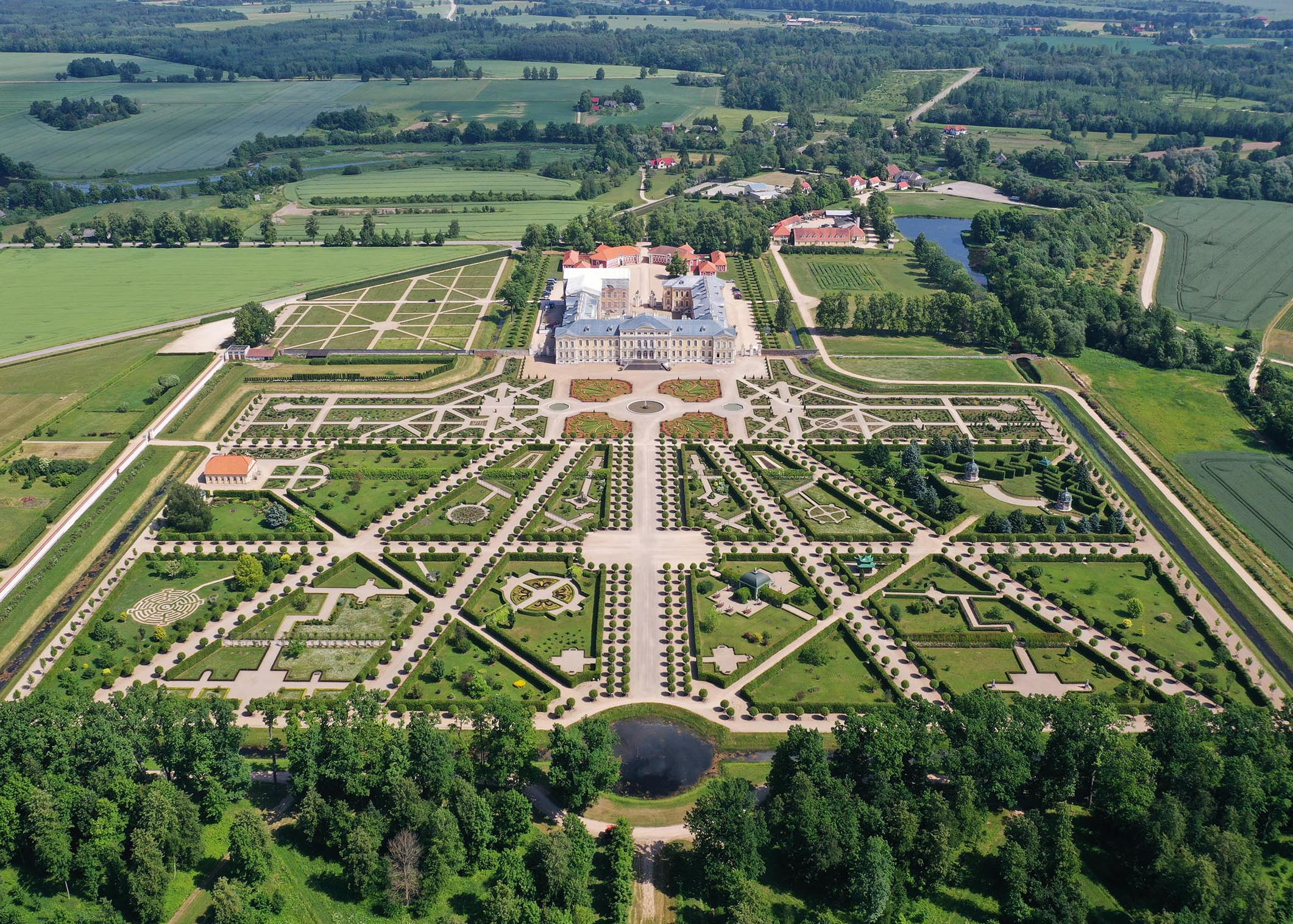

Rising from the flat plains of southern Latvia, near the small town of Rundāle, Rundāle Palace stands as the most magnificent expression of Baroque and Rococo architecture in the Baltic region. Often called the “Versailles of Latvia,” the palace is not merely an architectural jewel—it is a living chronicle of Baltic aristocracy, imperial ambition, cultural resilience, and national revival.
A Palace Born of Power and Prestige
Rundāle Palace was commissioned in the 1730s by Ernst Johann von Biron, the powerful Duke of Courland and Semigallia and a close confidant of Empress Anna of Russia. Designed by the legendary Italian architect Bartolomeo Rastrelli—the same genius behind the Winter Palace in St Petersburg—the palace was intended as a summer residence that would rival Europe’s grandest courts.
Construction occurred in two major phases:
- 1736–1740, when the main structure and grand interiors were laid out
- 1764–1768, when the palace was completed after Biron’s political exile ended
The result was a palace that seamlessly blended imperial ambition with refined artistic taste.
Baroque Grandeur and Rococo Refinement
Rundāle Palace is a masterclass in Late Baroque symmetry combined with Rococo ornamentation. Its yellow-and-white façade stretches elegantly across the landscape, framing a formal courtyard that immediately signals aristocratic authority.
Inside, the palace unfolds into more than 130 richly decorated rooms, many restored to their original splendor. Highlights include:
- The Golden Hall, a dazzling ceremonial space adorned with gilded stucco and elaborate ceiling paintings
- The White Hall, once used for balls and official receptions, defined by its airy elegance and musical acoustics
- The Duke’s Private Apartments, showcasing intricate woodwork, silk wall coverings, and period furnishings
Every room reflects the hierarchical order and aesthetic ideals of 18th-century European court life.
The French Garden: Geometry and Symbolism

Behind the palace lies one of the finest French formal gardens in Northern Europe. Designed according to strict geometric principles, the garden symbolizes human control over nature—a core Baroque concept.
Key features include:
- meticulously shaped hedges and parterres
- ornamental fountains and pavilions
- a historic rose garden with thousands of varieties
In summer, the gardens transform into a vibrant tapestry of color, offering a serene counterpoint to the palace’s opulent interiors.
From Imperial Residence to National Treasure
Rundāle Palace’s history mirrors the turbulent past of Latvia itself. Over the centuries, it has served as:
- a ducal residence,
- a symbol of Russian imperial influence,
- a military hospital during World War I,
- a school and storage facility in the Soviet era.
By the mid-20th century, the palace had fallen into serious disrepair. Its revival began in the 1970s, led by renowned Latvian art historian Imants Lancmanis, whose decades-long restoration effort became a cultural mission of national importance.
After Latvia regained independence, Rundāle Palace emerged as a symbol of cultural resilience and identity, restored not as a relic of empire, but as a public monument to art, history, and craftsmanship.
A Living Museum of European Court Culture
Today, Rundāle Palace operates as a museum and cultural center, offering:
- permanent exhibitions on Baltic German nobility and court life
- temporary art exhibitions
- classical music concerts and cultural festivals
Visitors experience not just architecture, but the social rituals, aesthetics, and power structures that shaped 18th-century Europe.
Visiting Rundāle Palace Today
Located about 80 kilometers south of Riga, Rundāle Palace is easily accessible by car or guided tour. The best time to visit is late spring to early autumn, when the gardens are in full bloom.
Whether admired for its architectural perfection, historical depth, or cultural revival, Rundāle Palace remains one of the most extraordinary heritage sites in the Baltics—a place where European history, art, and identity converge.

Leave a Reply